Saturday, January 11, 2014

Testing: The Enemy of Life-Long Learning

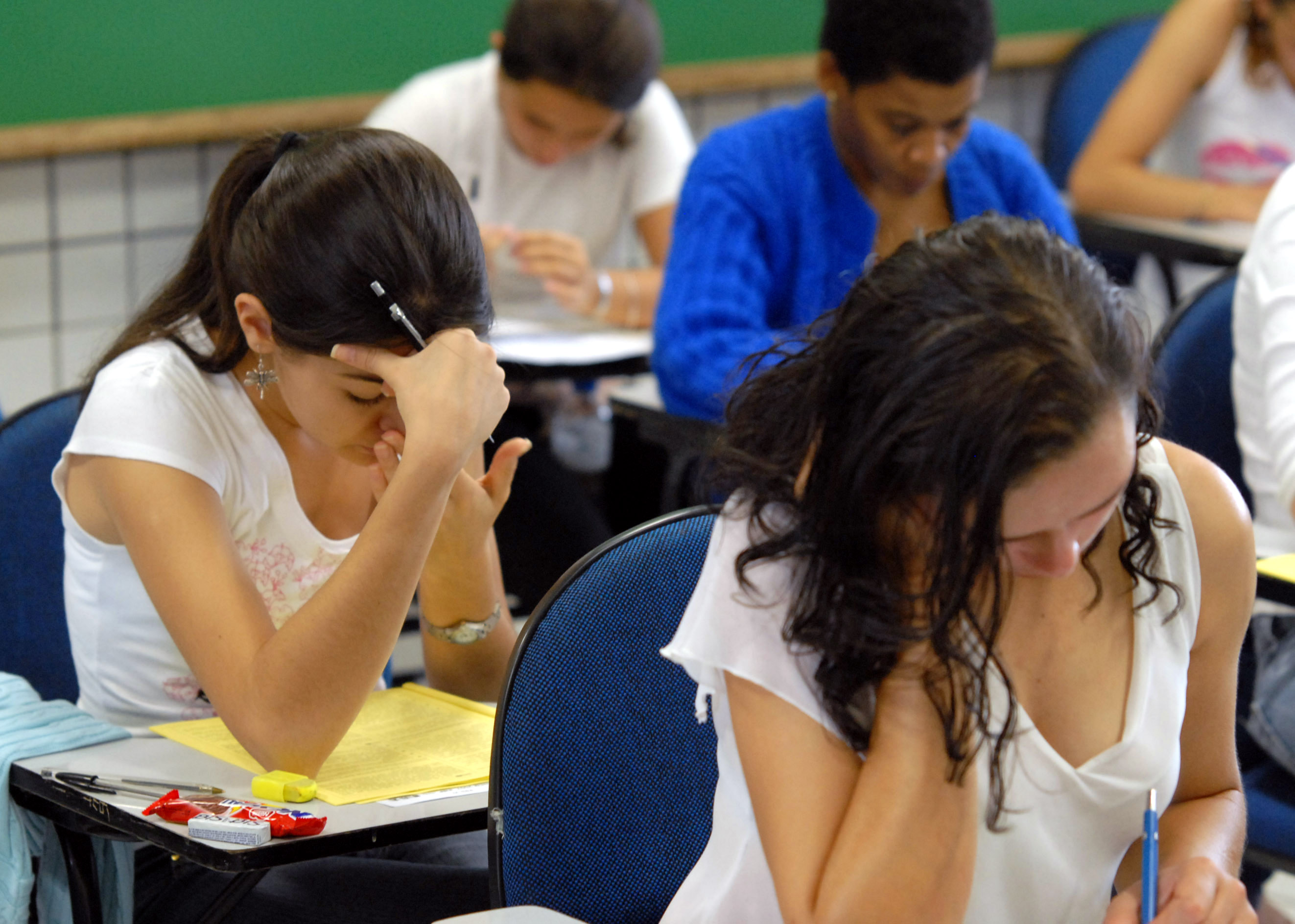
This morning, as I was watching my wife make pancakes for breakfast, I started thinking about the absurdity of testing.  Lori is an incredible cook, but has never once taken or passed a cooking test.  She just learned because she enjoyed it.  She tries new recipes, and we give her feedback on those recipes, which she then uses to learn more.

This got me thinking about how harmful a testing culture is for our students.  I'm not just talking about standardized high-stakes tests, but all tests that are designed to measure learning out of the context for which that learning needs to be used.
Photo credit:  Wikipedia

People always say, "We need tests because life is full of tests."  That's nonsense.  Life isn't full of tests.  It's full of assessments.  As an adult, I can count the number of tests I've had to take since college on 1 hand.  As adults, we do stuff and either succeed or learn to do something differently the next time.  If I make pancakes for my kids, I don't need to pass a test first to do it.  I just make them.  And if they are awful, I either fix the recipe or get asked to make omelets next time. 

That's life.  Trial and error.  

The vast majority of adults don't take tests, but we are constantly tested (assessed would be a better word), and we get lots of feedback. When we prepare kids for a world of taking tests, we don't prepare them for the real world which will require them to process the feedback they constantly get from their assessments. Testing forces them to see things as black and white, success or failure. It teaches them that either they know something, or they don't. It doesn't teach them to learn what they don't know. 

Testing teaches our students not to be the life-long learners that we so often preach about in schools, but upon which we so rarely focus our efforts.  

If we really care about our students being life long learners, we need to start assessing them in a way that encourages them to learn from their mistakes.  We need to move away from a culture of testing and towards a culture of meaningful, relevant assessment that mirrors what students will see when they leave our schools.  

Monday, December 30, 2013

Talking Education on the David Madeira Show

This morning I had the enjoyable experience of being a guest on the David Madeira Show, a local morning talk show in Northeastern Pennsylvania.  It was my first live interview, and despite my nerves at the beginning, it really was a lot of fun.  We're always critical of ourselves when we see video or hear audio recordings, and listening to the interview for me is no different.  I "ummed" and stumbled over words a bit more than I would have liked, and committed a few grammar sins.  Despite that, I think I did a pretty decent job of getting a few points across.  Since he invited me to come back on the air after the trip to D.C., I'm going to assume that I did alright.

I'm happy that being a PAEMST recipient is opening these opportunities to me.  For years I've been writing about the need for non-standardized student-centered learning in schools and it's nice to be able to share that now in other ways.  I'm appreciative to David for having me on the show and for the kind words he spoke before, during, and after the interview about me.

After the interview David also referenced my post explaining why the Common Core State Standards Initiative puts our educational focus on the wrong things and actually prevents students from being prepared for colleges and careers.  I hope that people listening were intrigued enough by the conversation to check out the post.

While I was doing the interview I recorded the live stream using Garage Band.  You can listen below.


Friday, December 27, 2013

Live Interview on the David Madeira Show

This morning I accepted an invitation to an on-air interview about winning the PAEMST award on Monday morning, December 30th, with David Madeira on his morning talk show.  I'm appreciative for the opportunity and looking forward to talking with him about education.
David Madeira

You can listen to his show by streaming it live from his website, or by tuning in to 94.3 FM in the Scranton, PA area.  His show airs on weekdays from 6-9AM.  I'll likely be on during the 7 o'clock hour. 


Saturday, December 21, 2013

I'm Going to Receive the Presidential Award for Excellence in Math and Science Teaching (PAEMST)

The last twenty-four hours have been a whirlwind.  Yesterday the White House put out a press release naming me and 101 other elementary math and science teachers as 2012 PAEMST recipients.  Sometime in the next few weeks I'll be traveling to Washington D.C. for several days of professional development planned by the National Science Foundation, a photo opportunity with the President of the United States, and an award banquet where I'll receive my award.  Since I found out last evening my phone has been ringing off the hook, my Facebook page and Twitter feed have exploded, and I've received a ton of text messages with friends, family, and colleagues offering their congratulations.  I am humbled and appreciative of every one of them.  While I'm excited and thrilled at the experiences that are upcoming, I know that without the support of my friends and family, the professional growth that has come with having an great online PLN, and the incredible colleagues that I am blessed to work with every day at the Wallenpaupack South Elementary, this never would have happened.

I want to record this process here on my blog for two reasons.  First, it's going to be an incredible journey.  I can't wait to meet the other winners when I travel to Washington D.C. and to add them to my network of amazing teachers that I learn from and with on a daily basis.  I want to keep track of everything that happens so that I can look back on it later.  Secondly, during the past year and a half since I found out that I was a finalist, I've sought out information on PAEMST winners many times.  There's not a whole lot out there.  A few past winners have recorded their experiences in blogs, and I was very appreciative to be able to learn from them.  So, for all the future finalists and winners who are seeking information, I'll do my best to share my experiences for you as well.  Over the next few weeks, I'll create a page where I share everything I have from the lesson I had videotaped to submit during the application process through the trip to D.C.

I was nominated for PAEMST back in the fall of 2011 by my principal at the time, Nancy Simon.  Even though I was honored to be nominated, I almost didn't apply.  As teachers, we always have so much going on, and when Winter Break rolled around that year, I hadn't even looked at the application yet.

After break I decided to go ahead with the application process.  It was grueling, but provided for great self-reflection.  I probably recorded 3 or 4 different lessons before I settled on the one I submitted.  The written part of the application was extensive, too.  It was limited to 15 pages with 10 pages of supplemental materials, but I found that after trying to answer all the questions thoroughly I was over by several pages.  It took quite a bit of creative editing, word replacement, and formatting to fit the guidelines.  I ended up using every line on every page.

Luckily, I had several people that I knew in both my online PLN and in-person who were either past winners or uber-experts on math pedagogy to read over my paper.  I'm so appreciative to them for reading over my application and giving me feedback.  They all told me that I had a really strong chance at winning, but I knew the odds were against me.  After all, there had to be hundreds or thousands of people submitting applications in Pennsylvania, right?

At the end of the 2011-2012 school year I found out that I was selected as one of three state finalists in Pennsylvania for the math portion of the award.  Three others were finalists for science.  Even though the National Science Foundation can choose not to give an award to a state if they don't believe any of the finalists warrant recognition, I was pretty excited to get that far, and that I had about a one in three chance of winning.

Then, the waiting began.  From the past winners to whom I had spoken, I knew that I would be getting a request for a FBI background check around New Years if I was a winner.  When January came and went, I figured I hadn't won.  By March, I figured there was no chance.  I was disappointed, but thrilled that I had at least been chosen as a state finalist.

Around the end of July I stumbled upon a tweet from someone using the #PAEMST hashtag stating that nobody had received FBI clearance requests yet.  Maybe I did have a chance!  I tried to keep myself from getting my hopes up.  People around me kept telling me that I still had a chance.

I got the FBI clearance request from the Office of the President during the last week of July.  It explicitly stated that I could not notify anyone except for my immediate family that I had received this request.  I had a pretty good idea that I was a winner at that point, but there's always that doubt until things are official.  The National Science Foundation sent new requests via e-mail for information, a headshot, and answers to essay questions for the awards booklet.

Then, nothing happened.  September passed.  Then October and November.  There was no word.  Every once in a while I would start to have doubts that I had won and I'd do a Twitter search for #PAEMST, or a Google search for "PAEMST 2012" to see if anyone else had heard news.  Of course, nobody else had heard anything either.

Yesterday I left school around 3:10 for the weekend thinking about the errands I had to run and the Christmas shopping I still needed to finish.  PAEMST was the last thing on my mind.  Around 5:30 I happened to check Tweetdeck to see if anyone had responded to the tweets I sent earlier in the day sharing pictures and videos of the Global Kidwish Project in which some of our classrooms had participated and green screen videos our special education students had made using the DoInk Green Screen app on the iPad.  What I found instead was a tweet from a Scranton Times-Tribune reporter congratulating me on my "National Award" and asking me to give her a call.

My heart started racing.  Some searching on the internet led me to the press release I linked above.  I knew I had won.  I shared the press release on Facebook and Twitter.  I checked my school e-mail and found that the National Science Foundation had sent me a congratulatory e-mail around 3:30, just after I left school.  After playing a little phone tag I did get a hold of Sarah at the Times-Tribune, and she wrote a wonderful article that was run in this morning's paper.

The response has been truly amazing.  The kind words and outpouring of congratulations have left me watery-eyed many several times.  It is truly a blessing to have such wonderful friends, family, and colleagues.

In the upcoming days I'll share the video lesson that I used for the application and anything else I can find or remember from the application process.
Wednesday, December 18, 2013

Serendipity! The EdTech Chat 'n Chew Podcast

I’m often amazed by how often the Universe provides serendipitous moments at just the right time.  Despite being a firm believer in the philosophy of “we’re always where we’re supposed to be”, I still get a kick out of the way perceived missed opportunities often turn into defining moments of growth.
One of the best examples in my career was about 3 years ago when I put in an application to move into the ranks of administration.  I went through the interview process, thought all went well, and then was disappointed to learn that the positions for which I applied were filled with others.  It ended up being one of the best things that ever happened to me.  The following year I was asked to present at two state level conferences, started teaching the graduate courses that have become such a source of growth and learning for me, and was chosen as a state finalist for the 2011-12 Presidential Award for Excellence in Math and Science Teaching (winners still haven't been announced).  Most importantly, those things allowed me to discover that teaching is my true passion, that I belong in classrooms rather than boardrooms, and that I can make the impact I want to make without moving into administration.  I’m not saying I’ll never make that jump, but right now I can’t imagine being in a job where I love what I do more.

I mention this because another of those serendipitous moments seems to have happened this year.  After teaching 5th grade for 16 years, my position was eliminated due to our enrollment.  We needed one less 5th grade teacher, and I was the least senior.   I stressed a lot last year because I loved teaching 5th grade.  My district administrators were great, though, and created a position they felt would best utilize my skill set.
Since September I’ve been working as a Curriculum Support Coach.  I get to work with teachers and students to do really amazing things.  Some of my time is focused on integrating technology.  Sometimes I get to work in math classes.  Some teachers bring me in to help them develop project, problem, and inquiry based lessons.  All of it seems to be pushing the boundaries of what we have always done in schools.
There have been bumps.  I miss having my own classes and students.  I miss the relationships that were developed over the course of the year, and the ability to implement a great idea that comes to me on the spur of the moment.  I miss the tangents and moments of spontaneous learning that occurred in my classroom.  To be honest, even though my days were spent doing amazing things this year, I wasn’t sure I liked this new job until recently.
What changed is the Facebook message I received from Dyane Smokorowski, last year’s Kansas State Teacher of the Year, about a month ago asking me to join her, Andrea Keller, and Karen Wright-Balbier (two outstanding instructional technology specialists) in putting together the Kidwish Project.  It has been such a success, and we enjoyed working together so much that the four of us decided to launch the EdTech Chat ‘n Chew Podcast to share the amazing things that each of us are doing in our schools and districts.
Those of you who read this blog know how much I believe in professional networking, personalized professional development, and sharing successes and failures with others to allow them to learn from your experiences.  This podcast will be a vehicle for teachers to do all of that.
Our mission is to record weekly episodes of about 15 minutes – perfect for teachers to be able to listen/watch during their preps or lunch breaks.  We’ll be sharing some of the amazing things we are seeing and doing in the classrooms in which we are working and ideas for empowering students in the 21st Century.
Collaborating with these three amazing women has made me feel that I’m where I’m supposed to be.  I really believe that this podcast and the community of listeners and collaborators that we hope to build are going to make a huge difference in this time when those who are trying to create student-centered, technology-rich, innovative classrooms are swimming upstream. 
Below, I am embedding our first podcast episode along with links to the podcast’s website, YouTube channel and Facebook page.  Subscribing to our YouTube channel will allow you to make sure you don’t miss an episode.  Show notes from each show with links to the resources we discuss will be posted on the website.

EdTech Chat 'n Chew Podcast Website:  edtechchatnchew.weebly.com
Facebook Page:  facebook.com/edtechchatnchew
YouTube Channel:  http://www.youtube.com/channel/UC-dn9Wo967MEL3q2S__J6Zg


Monday, December 2, 2013

Global #Kidwish Project

"Great moments are born from great opportunity." - Herb Brooks
It's been an incredible week.  Every week seems pretty incredible since I switched jobs this year from being a 5th grade teacher to a Curriculum Support Coach.  I still often miss having my own class and being able to act on moments of serendipity without having to convince someone to let me borrow their students, but it's exciting to have the job of helping teachers and students do awesome things every day.

This week was exceedingly incredible, though.  First, I was able to work out the details with our local newspaper, The News Eagle, to allow our 5th grade students to start writing blog posts for their website.  The paper was looking for the perspectives of students in the area, read the blog posts our students have been writing, and asked if we could partner up.  There's no better way for our students to learn to write than to actually be journalists, so we were happy to accept.

Next, after about a month of research and planning, the our 5th grade students put on their first US History Living Wax Museum.  Each student researched a figure from early American History, wrote a monologue in the first person, and came up with a costume that was as historically accurate as possible. We invited younger students and community members.  Each student stood or sat frozen until "activated" by a visitor.  They then came to life and delivered their monologue before freezing again.  It was a whole lot of fun, our students learned a great deal, and the comments from our visitors were overwhelmingly positive.

The most exciting thing about this week is the launch of an fantastic global collaboration project that I have been lucky enough to be working on with three absolutely amazing teachers from across the country.  A few weeks ago Dyane SmokorowskiAndrea Keller, and Karen Wright-Balbier contacted me and asked if I'd be interested in collaborating on a project intended to connect classrooms.

One of the great things about being a networked educator is the inspiration that comes from seeing the things that others do with their students.  Having been connected to these teachers for years, I was so excited and humbled that they thought of me to help out with this.

Our intention is to connect regular ed, special ed, special needs, and mainstreamed classrooms across North America so that students can share their wishes for 2014 with each other.  They'll do this by exchanging holiday cards and meeting face-to-face to share their wishes via videoconference.

I believe that school should be less about what you know and more about what you can do to make a difference.  Instead of telling students to sit down and listen, we should be empowering them to stand up and facilitate the change they want to see in the world.  Instead of complaining about what's wrong, I want my students to start becoming the members of society that make things right.

My hope is that this project is a way to help students start those conversations.  If the four of us can assist teachers all over the world in helping their students share their wishes and dreams for the upcoming year, maybe those students and teachers can start making them come true.

To learn more about the 2014 Wishes Project, and to sign up, visit the website we created.  You'll find information about the project, a map of classrooms that have already signed up, and possible extension opportunities.  If connecting with other classrooms like this seems overwhelming to you, don't worry.  We're going to help you with whatever you need to make this successful.

I opened this post with a quote from Herb Brooks, a hockey coach most famous for guiding the 1980 USA Olympic team to the gold medal in the Lake Placid Olympics.  Great moments are born from great opportunity.  I know what an amazing opportunity this is for our students.  I can't wait to see the moments yet to come.  I hope you'll join us.

Monday, October 28, 2013

"College and Career Ready" is the Wrong Goal

Anyone having anything to do with education has been bombarded lately with information about how the Common Core State Standards (CCSS) are going to fix what's wrong with American Education.  This national curriculum is supposed to ensure that every student who graduates from an American high school will leave prepared for either college or a career.  On the CCSS website, this idea is clearly written into the mission statement for the standards:
The Common Core State Standards provide a consistent, clear understanding of what students are expected to learn, so teachers and parents know what they need to do to help them. The standards are designed to be robust and relevant to the real world, reflecting the knowledge and skills that our young people need for success in college and careers. With American students fully prepared for the future, our communities will be best positioned to compete successfully in the global economy.
The problem is that focusing on "college and career readiness" is the wrong goal.  Worse, it's a goal that will ensure that less students are prepared for college and/or careers. 

Let's break down that mission statement.
  • The Common Core State Standards provide a consistent, clear understanding of what students are expected to learn, so teachers and parents know what they need to do to help them. The standards are designed to be robust and relevant to the real world, reflecting the knowledge and skills that our young people need for success in college and careers.
This sounds great, but it's founded in a false belief that anybody can predict what stuff kids will need to learn to do the jobs of the future.  We don't know that.  Nobody does.  Our current elementary students will graduate seven to thirteen years from now in the years 2020 through 2026.  Think about this.  Seven years ago, smartphones like the iPhone and tablets like the iPad didn't exist.  Could anyone back in early 2007 have envisioned how mobile technology would change the workplaces we have today?  What makes us think that we can predict what the workplace of 2020 will look like? 

In December of 2012 Forbes Magazine came out with a list of the top 10 skills that 2013 employers were looking for in employees.  Almost all of these qualities were not content based.  They were not skills that could be neatly written into standards.  These are traits like "critical thinking" and "complex problem solving" that require experience with solving real world problems.

And proponents of CCSS will tell you that those standards are designed to do just that.  But they aren't.  They can't do that.  Because CCSS are designed to be used to judge children, schools, and teachers on standardized tests.

So, here's what's really happening instead of that experience with solving real problems.  School districts are rushing to buy textbooks that are aligned to CCSS so that students can pass those tests.  Teachers are being told not to stray from teaching the lessons in those textbook programs so that students pass those tests.  Students are being taught how to pass those tests.  Nobody ever solved a real problem in their community by working out of a textbook or workbook. 

Here's the truth:  Focusing and measuring what students know will always prevent you from focusing on what students can do.  And they can do amazing things if we'll let them.
  • With American students fully prepared for the future, our communities will be best positioned to compete successfully in the global economy.
I don't think anyone can argue with this.  I just don't believe that CCSS is the best way to prepare students for the future.  And I certainly don't agree that this is should be the end-goal of education.

Instead of focusing on preparing students for "college and career", we should be preparing them for life.  Heaven knows, there are plenty of people who were successful in college and/or are successful in their careers that are miserable.  How many times have we heard about wildly "successful" people who, when we define success as more than "how much money you make", aren't? 

We're missing the forest by focusing on the trees.

So, instead of preparing students for college and career, I propose that we prepare students for life.  Teach them how to think for themselves.  Teach them how to solve real problems in society.  Teach them to come up with creative solutions, to make a difference, to experience the joy of being kind to others, to leave their communities better, and to advocate for the things they feel passionate about. 

Instead of discussing a list of things our students need to know that was lobbied for and developed with money from large profit-driven corporations (that may or may not have our children's best interests at heart), imagine if teachers all across the country spent professional development time discussing project, inquiry, problem, and service based learning projects that allow our students to learn content while also learning the very things that will help them succeed in an unknown future.  Imagine if our focus was on student learning instead of "standards implementation".   

The beauty of this goal is that, along with leaving students prepared for life in ways that our increasingly narrowed curriculum cannot, it will also prepare our students for their futures in every way possible.

Teach them to think for themselves, to love learning, to problem solve, to innovate, and to connect with others, and there will be nothing they cannot accomplish.

They'll even be prepared to be successful in college or their future career.