Every teacher certification program spends time teaching us Maslow's Hierarchy of Needs. (I used the term 'teacher certification program' and not 'teacher preparation program' because I'm not familiar with what gets cut when 4 year college programs get squeezed into crash-course 5-week teacher prep programs like those offered by Teach For America.) It's widely accepted that people cannot reach the higher levels of the Hierarchy without having their needs met at the lower levels. We're taught this so that we can help our students learn. Students who are hungry, sleep-deprived, unhealthy, etc. cannot learn until those needs are met.

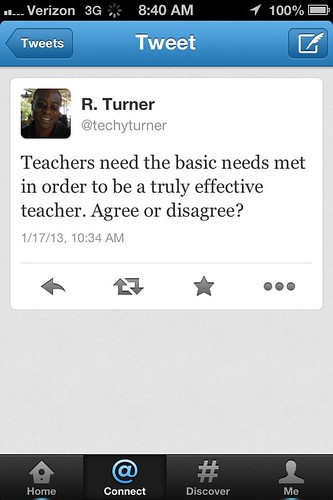
The answer is obvious. Teachers, just like any other people, cannot be effective at anything without having their basic needs met. I got thinking about Maslow, his Hierarchy and how it relates to teachers in today's education culture.
When we look at the Hierarchy, the qualities we find in excellent teachers like creativity, problem-solving, and lack of prejudice (objectivity) are all found at the top. In order to reach that top teachers must have the needs below them met.
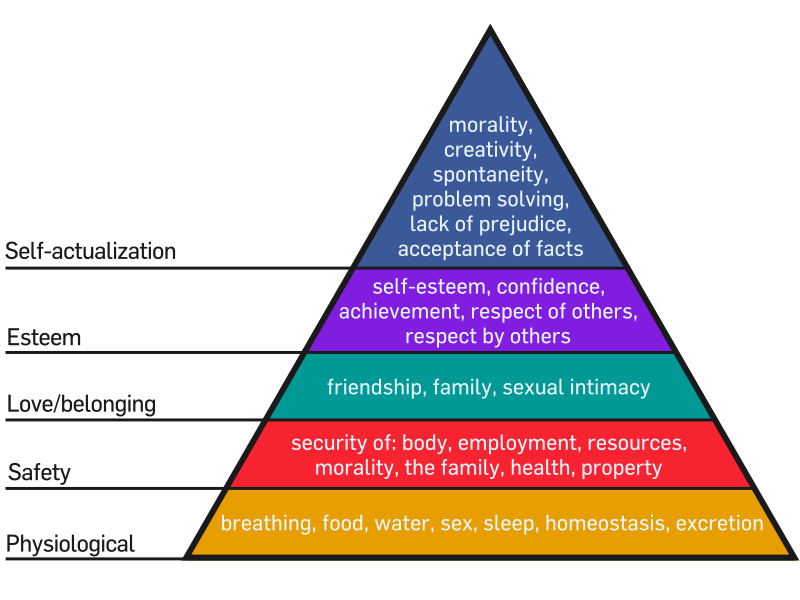 |
As we look at the needs below the top, we start to see some of the things that the reform movement of the last decade has targeted: teacher job security, respect of the teaching profession, resources available to teachers in schools. It's clear that teachers are incapable of reaching their full potential without these necessities.
The question we've got to ask then is, "What is the purpose of this reform movement?" Either those pushing for these reforms believe that excellent teaching does not include objectivity, problem-solving, and creativity, or there is a motive other than excellent teaching behind their policies.
Either way, we need to look in a different direction if we are to provide our students with the excellent education they deserve.

